
Stress Incontinence After Menopause: What It Is, Why It Happens, and Exercises That Truly Help
I still remember the moment I realized stress incontinence had officially entered my life. I sneezed—just a sneeze, nothing dramatic—and suddenly I was standing there thinking, “Well… crap” It’s funny how menopause gives you these little ‘surprises,’ like it’s handing out party favors no one asked for.
After that day, I became very familiar with crossing my legs before coughing, laughing, or even thinking about jumping, and I started wearing those slim, discreet pantiliners I swore I would never need. If you’ve been there too, trust me—you’re in good company. And the good news is that with the right exercises, things really can improve.
Stress incontinence is one of those topics many women whisper about—but it deserves open, confident conversation. If you’ve ever leaked a little urine when you laugh, sneeze, cough, lift something heavy, or exercise, you’re not alone. In fact, stress incontinence is incredibly common in women over 50, especially after menopause. And the good news is: it can improve with the right strategies.
What Is Stress Incontinence?
Stress incontinence occurs when physical pressure—like a cough, sneeze, or movement—overwhelms the pelvic floor muscles and tissues that support the bladder and urethra. When these muscles aren’t strong enough to stay contracted during sudden force, leakage happens.
It’s not about emotional stress; it’s about mechanical stress on the bladder.
Why It Happens More Often After Menopause
Menopause brings hormonal changes that directly affect the pelvic floor and bladder. The biggest factor is the drop in estrogen, a hormone that helps keep pelvic tissues strong, elastic, and well‑supported.
After menopause:
- Pelvic floor muscles weaken, especially if they’ve already been stretched by childbirth.
- Connective tissues lose elasticity, making it harder for the bladder and urethra to stay supported.
- The urethral lining thins, reducing its ability to stay closed under pressure.
- Weight changes and decreased muscle mass can add additional strain.
These changes don’t mean stress incontinence is inevitable—but they do explain why it becomes more common.
Exercises That Help Strengthen the Pelvic Floor
The pelvic floor is like any other muscle group: with targeted training, it can become stronger, more coordinated, and more supportive. Here are the most effective exercises for reducing stress incontinence. As always, check with your doctor before beginning any exercise program.
1. Pelvic Floor (Kegel) Contractions
How to do them:
- Sit or lie comfortably.
- Gently tighten the muscles you’d use to stop urine flow.
- Hold for 3–5 seconds, then relax for the same amount of time.
- Repeat 10–15 times.
Why they help: Kegels strengthen the muscles that support the bladder and urethra, improving control during sudden pressure.
Tip: Avoid squeezing your buttocks or holding your breath—only the pelvic floor should be working.
2. Quick Flicks
These are fast, short pelvic floor contractions.
How to do them:
- Tighten the pelvic floor quickly.
- Release immediately.
- Repeat 10–20 times.
Why they help: Quick flicks train your muscles to react instantly—exactly what you need during a sneeze or laugh.
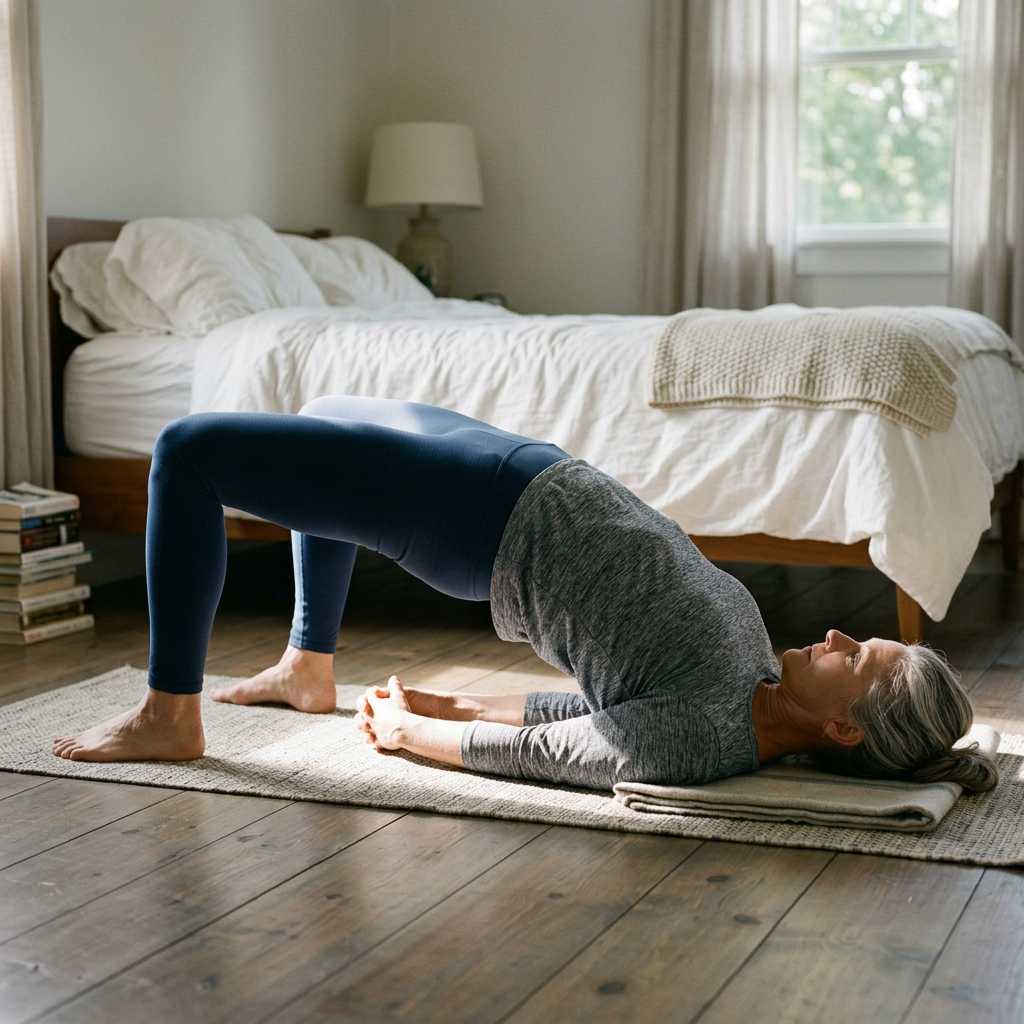
3. Bridge Pose with Pelvic Floor Engagement
How to do it:
- Lie on your back with knees bent.
- Lift your hips into a bridge.
- As you lift, gently contract your pelvic floor.
- Lower slowly while relaxing the muscles.
Why it helps: This strengthens the pelvic floor and the glutes, which work together to support the pelvis.
4. Deep Core (Transverse Abdominis) Activation
The deep core muscles wrap around your abdomen like a corset and support the pelvic floor.
How to do it:
- Sit or lie down.
- Inhale to relax.
- Exhale and gently draw your lower belly inward (like zipping up a pair of jeans).
- Hold 5 seconds.
Why it helps: A strong deep core reduces pressure on the bladder and improves pelvic stability.
5. Squats with Pelvic Floor Awareness
How to do them:
- Stand with feet hip‑width apart.
- Lower into a squat while relaxing the pelvic floor.
- As you rise, gently contract the pelvic floor.
Why they help: Functional movements like squats train your pelvic floor to work during everyday activities.
How Long Until You See Improvement?
Most women notice changes within 4–8 weeks of consistent practice. The key is regularity—just like any strength training program.
When to Seek Professional Support
If leakage is frequent or worsening, a pelvic floor physical therapist can provide personalized guidance. They use tools like biofeedback and targeted exercises to help you regain control. Always consult a healthcare professional if symptoms are persistent or concerning.
Final Thoughts
Stress incontinence may be common after menopause, but it doesn’t have to be your “new normal.” With awareness, targeted exercises, and a bit of patience, you can strengthen your pelvic floor and regain confidence in your daily activities.
Shanelle, RN 50+ and Flourishing 💕





Leave a Reply